LISTEN ON:
Latest
Check out the episodes!
2 Gs ON A BLOG
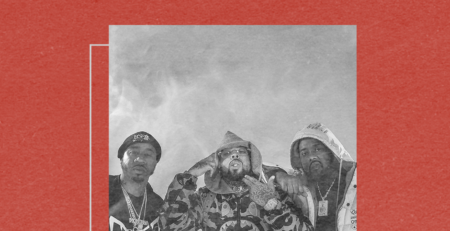
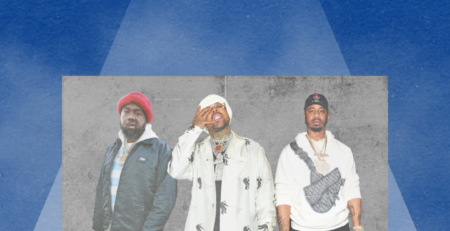
Griselda Records: The Game’s Cashiers

Family relations often influence and dominate industries, and the hip-hop industry is no exception. The 90s saw cultural domination by the likes of Snoop and Nate Dogg (cousins), Dre and Warren G (stepbrothers), and the Wu-Tang trio of cousins in the shape of RZA, GZA, and Ol’ Dirty Bastard. Today, Migos may well represent the most well-known family of hip-hop artists, but if Baby Keem continues to release albums of similar quality to The Melodic Blue, it may not be long before Keem and Kendrick’s family ties are top of more than just the morning. Looking to the UK, Skepta and JME provide one of the most successful family connections in rap. Whatever the era, whatever the place, rappers connected by blood have always seemed to have a certain ineffable chemistry.
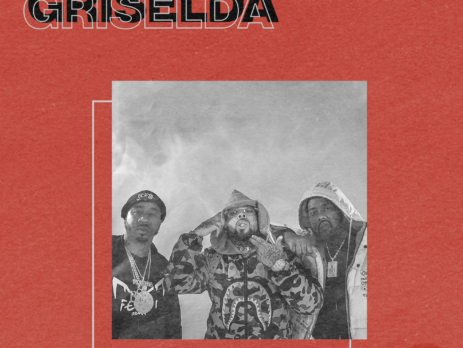
‘Chemistry’, however, may well be an understatement in the case of Griselda Records. The label is much more than just brothers Westside Gunn, Conway the Machine, and their cousin Benny the Butcher. Mach-Hommy, for instance, joins the brothers and replaces Benny as one of the label’s trio of founding fathers. However, Westside, Conway, and Benny are undoubtedly the main attraction, and their unique sound – highly reminiscent of the era of Wu-Tang Clan supremacy – alongside their business and fashion ventures, have propelled the label from a Buffalo-native organisation to a global movement, influencing mainstream hip-hop in ways the mainstream itself is perhaps not yet fully aware.
The Style
On ‘1985 (Intro to the Fall-Off)’, J. Cole laments the monotony of hip-hop today, claiming that “trap drums is the shit that’s hot now”. Jermaine must not have heard of Griselda. In a recent Twitch rant, so passionate you would think every ‘Lil’’ rapper were his sworn mortal enemy, R&B legend, T-Pain, nearly burst a blood vessel in his forehead complaining about the very same lack of diversity in hip-hop these days. Teddy must not be doing his research.
To be fair, the two are not entirely wrong. Hip-hop does seem to have been nigh on colonised by trap beats in the last five years, and it has become increasingly difficult to distinguish between the East and West coasts, especially with Atlanta’s rise to absolute ascendancy. From Carti’s adlibs to Migos’ triplet flow, you could make a fairly convincing argument that hip-hop has somewhat amalgamated into one hot Atlanta-centric, adlibbed, Pierre-Bourne/ Metro Boomin-produced mess.
Enter Griselda Records. What Griselda bring to this colonised hip-hop world – besides quite simply the best adlibs in the game – is a masterful straddling of three different eras. In Westside, Conway and Benny, we see a return of the cocaine cowboys era of the 80’s and 90’s. References to the infamous booger sugar are literally littered over every track, and this is hardly a surprise when you consider the label’s name comes from the Colombian drug lord of the Medellín cartel, Griselda Blanco Restrepo, AKA ‘The Black Widow’. The group’s reverence for Wu-Tang is evident in almost every song, from the subject matter, to the ‘boom-bap’ beats, to the flows, to even the song titles.
At one stage, I was convinced the trio had some agreement to never deviate from this sound and, on one level, I respected any artist in the modern era who refused to budge from their own style. It takes serious willpower to do a Dave Chappelle-ian move and turn down the bags on offer these days, forcing any potential or would-be collaborator to meet you where you stand and not a centimetre closer to the halfway line. On another level, however, I feared the three simply could not make their usual tricks work on any other beat, perhaps literally belonging to an era which has simply had its time. How wrong I was.
Conway and Benny especially have more recently shown their versatility, through well-received collaborations with JID, Denzel Curry, REASON and more, demonstrating how effortless style-switching is for rappers as talented as they are. The current sound of the early 2020s is no challenge for the Griselda boys whenever they wish to stop paying such strict homage to the likes of Raekwon and Ghostface.
Call me cliché, but the third era the Griselda trio have their foot in is the future. If Hitler Wears Hermes 8 is indeed Westside’s final album, before he takes a more concerted step towards curation and executive production, then we have all the evidence that we could possibly need to see that Griselda is here to stay. Hip-hop, like all other industries and cultures, goes through trends, whether that be in dress, in sound, or in personage. What never changes, however, is that those who can truly rock a mic will always have a space in this field.
The Front Three
In every great trio, one of the fundamental pillars of success is the concept of complementary assets. Rooney, Ronaldo and Tevez were a fearsome front three, but no player alone was perfect: what CR7 lacked in defensive work-rate, Rooney and Tevez made up for in their bullish, if not ravenous approach to the game. Rodman never needed to worry too much about scoring with Jordan on the team, and Pippen there to play both sides of the court. While Firmino sometimes struggles to put the ball in the back of the net, his weakness is made up for by Salah and Mane’s ridiculous goalscoring exploits, all linked together by Firmino’s swagger on the ball and eye for a killer pass in the final third. Think Wade, Lebron and Bosh, or perhaps Klay, Steph and Draymond (excluding the disaster of the 2016 Finals of course) – would the Splash Brothers have ever been the same without Draymond’s defensive work? If any trio in history has ever possessed truly complementary assets, however, it may well be Westside, Conway, and Benny.
“The flyest nigga of all time and y’all know it”
– ‘Free Kutter’, Westside Gunn
Westside’s bars at times don’t match up to the quality of his brother and cousin, and it would appear he himself acknowledges that. He often leaves the other two to handle freestyles and live performances, like with the 2020 TIDAL live show, Griselda Presents: The Machine and The Butcher, and the group’s appearance on Fire in the Booth (although Westside does provide a beautiful cameo, demonstrating his uncanny likeness to a machine gun). However, sometimes rap isn’t all about bars. The energy an artist brings to a track can be contagious, and that’s exactly what Westside does so well: his delivery will do nothing if not make you feel like you yourself are the FLYGOD, and if you don’t believe his words, you’ll most definitely believe his adlibs.
Artists like Migos, Young Thug, and Carti have grabbed headlines over the last decade for their adlibs – lest we forget Carti’s purely adlibbed feature on ‘RAF’, or Thug’s 11-second “skrr” on ‘Halftime’. Flo Milli’s simple but incredibly effective “Flo Milli shit” is a personal favourite adlib in the game currently (especially when executed right on time with the beat, as she does on tracks like ‘In the Party’). However, if it’s adlibs you’re looking for, look no further than the Griselda boys and Westside Gunn in particular. Nearly every Westside verse I’ve heard has come armed with an artillery full of gunshot adlibs, to the extent he even chucks them in on his mate’s verses as they rap.
However, Westside is far more than a rapper/ machine gun impersonator. His eye for curation is nothing short of exemplary, and if this is the direction his career is heading, he is certainly well-equipped for the challenge. Part of what makes this trio so special is their brilliant beat selection – a crucial element to any rapper’s success. In this department, Westside is the clear frontrunner. All hip-hop heads love a good sample, and while artists such as Kanye West, MF DOOM and others are often praised for their sampling capabilities, songs like ‘Whoopy’, ‘Lucha Bros’, ‘Dear Winter Bloody Fiegs’, and ‘Wrestlemania 20’ demonstrate just how flawless Westside’s ear for a sample is. In the same album, you’ll find yourself transported from a guttural sounding, villainous instrumental, (‘Free Chapo’, ‘Scotties’, or ‘The Old Groove’) to a gorgeous Nina Simone or Aretha Franklin sample, with harps and soft piano loops drifting through your ears (‘Vivian at the Art Basel’ or ‘Ocean Prime’). Who knew gangster rap over the top of beautiful 80s love ballads could sound so good?
Of course, working alongside producers with the quality of Alchemist, Daringer, Conductor Williams and others always helps, but at the end of the day, an artist must make the final decision on which beats to use, and then decide how to approach that beat. In a recent interview for NPR Music’s series, The Formula, Westside even goes as far as to say his is the best ear in the game, detailing how he routinely combs through packs of over 100 beats, only to select as few as 2. In Westside, we truly see a calculated methodology behind almost every beat, perfectly curated to allow him to boastfully declare himself the FLYGOD once again.
“The hooligan, that made rapping on grimy loops cool again”
– ‘Gucci Casket’, Conway the Machine
Conway brings with him a never-ending roster of NBA-related punchlines and a flow that leaves you begging for more. Many rappers are only capable of approaching a flow in one way. DaBaby, for example, rarely sounds like he’s doing anything other than attacking the beat. On some songs, he doesn’t even wait for the beat to begin, so eager to flood his listener’s eardrums with his (at times) verbal diarrhoea. Other rappers like Smino, Noname and Saba (we’re still waiting on the Ghetto Sage project btw) find it easier to glide over a beat, their flow mixing seamlessly in with the instrumental in a way that makes you close your eyes whilst they lead you on a beautiful musical journey. Conway brings an ability to do both to an extent you wouldn’t believe, and with this flawless flow comes an indisputable intelligence. As Jay Electronica says during his feature on Westside’s most recent album, don’t let the Griselda boys’ adlibs fool you into thinking they’re nothing but cocaine cowboys – this is one of their many faces. Tracks like Conway’s ‘Front Lines’ and Westside’s ‘Michael Irvin’ demonstrate the Griselda boys’ clear ability to speak on the issues we sometimes praise other rappers for speaking on. When we consider the fact that Conway’s wordplay is so consistently hard-hitting that it sounds as though the man’s just walked through a Pack-a-Punch machine every time he steps in the booth, I think we can safely say Conway and co. have more to them than mere cocaine stories.
In my opinion, Conway is the group’s prized possession, the effortless spitter, the lyrical monster who can silkily skate on a track or mercilessly murder a beat. When you add in the fact he was shot in the neck and shoulder, leaving him with Bell’s Palsy and paralysed in the right side of his face, his lyrical miracles become even more astounding.
“More bars than them niggas who got hit with the Reagan laws”
– ‘Crowns for Kings’, Benny the Butcher
In Benny, the trio seems to have found its superstar, as he continues to rise to mainstream prominence. As much as I love Westside’s adlibs, Benny may just have the pick of the bunch with his nametag, “the Butcher coming, nigga!” Being the most marketable arm of the trio is what Benny specifically brings to the group, and explains his mainstream success in recent times. As I said earlier, rap isn’t always purely about who has the best bars around. I would be lying if I said Burden of Proof was my favourite project to come from one of the Griselda boys, but it’s quite easy to see why it’s done so well commercially. The features alone are largely big names who immediately take the project away from the purely Wu-Tang sound, into a more recognised listening experience for many hip-hop fans today. We’re all required to code-switch to some extent when we leave the comfort of our own homes and communities and enter our day jobs: Benny just seems to know exactly how to mix his own language with one which a wider audience will relate to and engage with.
Alongside that, let’s not underestimate Benny’s own skill in the game: the only reason I say he’s the second-best spitter in the group is because of Conway’s own excellence. Throughout the project, Benny demonstrated that he can still rock a mic far better than 90% of rappers could ever dream of. The same also goes for Westside. Perhaps I’m just guilty of over-comparing three incredibly talented individuals. As Rio Ferdinand once said, sometimes no comparison is needed: “Just enjoy them, man”.
‘The past is a foreign country; they do things differently there’
While some may praise Griselda for their absolute slap in the face return to the 90s, it’s quite easy to see why others instead criticise: when things are left behind in history, it’s often for a reason. It’s fairly apparent that rap remains a genre whose cup runneth over with toxic masculinity, but some notable and significant progress has been made in recent years to diversify the field. This makes it quite easy to accuse artists like the Griselda boys, with their nonstop and highly explicit references to gang violence and drug dealing, of backward motion. One concerning trend the Griselda trio’s music especially emphasises is just how young some boys are when they are groomed into a lifestyle far more unstable and traumatic than anyone would really wish for were they making fully autonomous decisions. Rappers have been accused of ‘glorifying gang violence’ for decades now, and it doesn’t seem likely these accusations, or the causes for them, will stop anytime soon. The subject deserves much deeper discussion than just this article: who’s allowed to have an opinion? Who’s allowed to tell others that they can’t make music that reflects their own reality?
Whatever your stance on the matter, the Griselda boys are worth a listen. Maybe you find having someone scream “DOOT-DOOT-DOOT-DOOT-DOOT-DOOT” in your ear isn’t for you. Fair enough. However, you may also just find yourself yelling “the Butcher coming, nigga!” around your house for the next 18 months. I know which category I fell into.
The Cashiers
Back in 2009, Drake said: “The game need change and I’m the motherfuckin’ cashier”. His diagnosis remains correct: the game is desperately calling out for change in 2021, but its usual heroes don’t seem up to the task. When the world needed him most, Kendrick vanished. When the self-professed cashier was called upon, he released another incredibly commercially successful album, but one which few would look you dead in the eye and argue is album of the year, in any year – even his diehard fans. Meanwhile, as our heroes slumber, Atlanta’s colonisation seems nearly complete, and although the sound certainly brings in the money and mainstream recognition, the game seems to be missing something which once was there.
In my view, Griselda are the game’s true cashiers today. They occupy a somewhat paradoxical, perhaps even oxymoronic space in the contemporary hip-hop world. Very often, the music is a monumental departure from the mainstream sound. As much as the likes of Joey Bada$$, A$AP Rocker (shoutout to Miley) and other recent East coast lyrical giants have carried the East coast’s flag, it is undoubtedly the Griselda boys who, in Joey’s own words, have ‘resurrected boom-bap fromdatomb$’. Simultaneously, however, the Griselda trio looks to pull hip-hop forward, in more ways than just sonically, but in fashion and business too. For those looking for something rather familiar, but also rather new, look no further than Griselda Records.


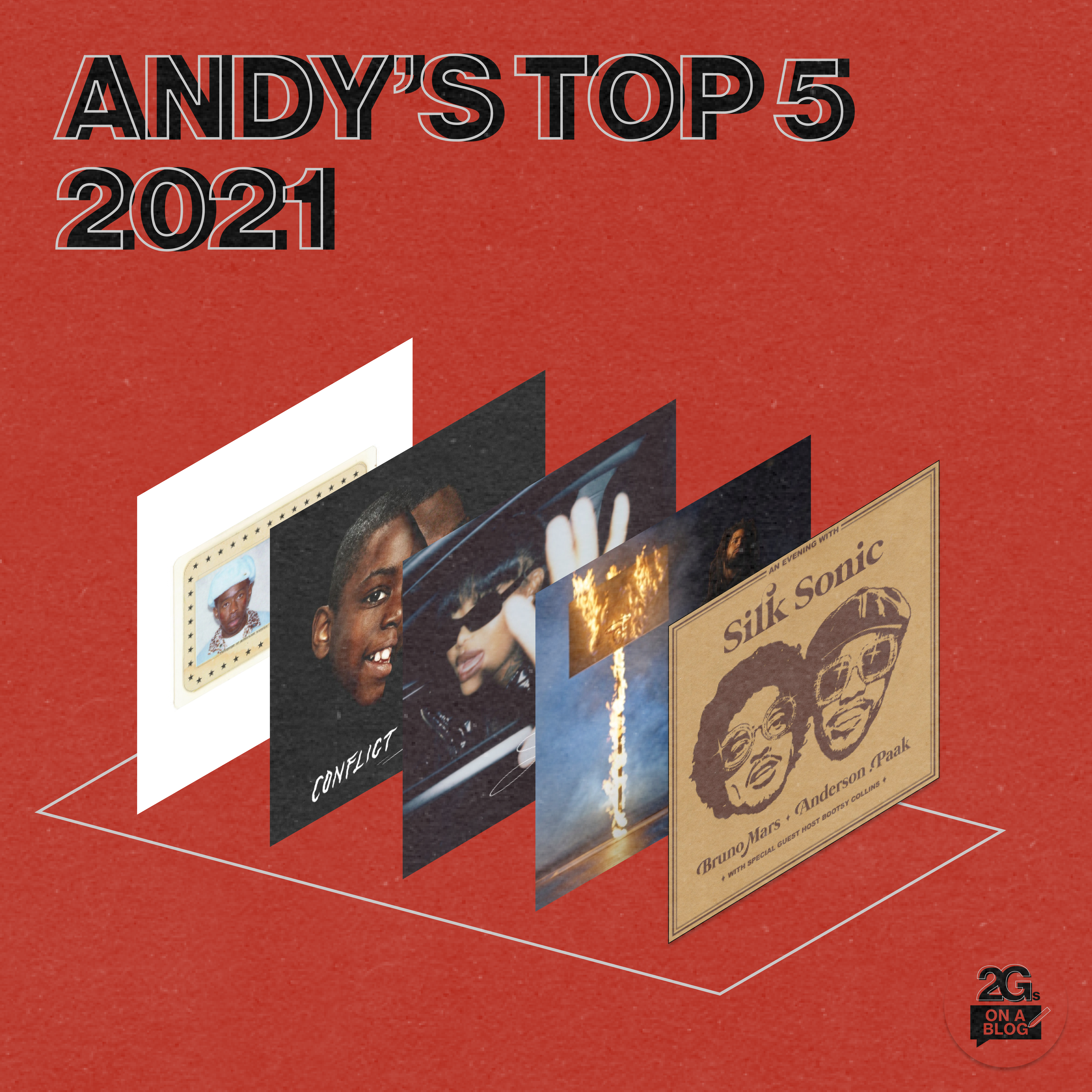
Andy’s Top Five Albums of 2021
Andy wraps up 2021 with reviews of his five favourite projects from the year
After the pandemic rocked the music industry, with no live shows in 2020, there were high hopes for what 2021 would have in store. Many of the industry’s heavy hitters returned to the fore after hiatuses of varying length. A lot has changed in Adele’s life since she last released an album in 2015, not least the birth of her son and the breakdown of her marriage, and 30 is a typically candid look into her emotional state. Another industry giant, Drake, also returned with his long-awaited follow-up to 2018’s Scorpion; however the impact of Certified Lover Boy ultimately had little to do with the quality of the music and far more to do with his ongoing feud with Kanye West – the competition with Kanye West’s Donda proved to be the latest exchange of blows in this (now seemingly squashed) beef. As the industry continues to await the return of Kendrick Lamar and SZA following the 2017 releases of DAMN. and Ctrl respectively, their TDE labelmate, Isaiah Rashad, ended his own five-year hiatus with The House is Burning, an accomplished project which proved to be worth the wait.
With features from Drake, Travis Scott, Kid Cudi, Lil Baby, Lil Uzi Vert, Big Sean, Future and more, Young Thug, Gunna and the whole YSL crew should be applauded for assembling half of hip-hop to craft a masterpiece in the Slime Language 2 collaborative album. Finally, Little Simz should also be applauded for repping for the UK with yet another impactful, artistic and creative effort in Sometimes I Might Be Introvert.
Without much further ado, let’s get into this year’s list…
5. CALL ME IF YOU GET LOST | Tyler, The Creator

As his name suggests, Tyler, The Creator is a creative force to be reckoned with. Every album is an entirely different listening experience and his sixth album, CALL ME IF YOU GET LOST is no exception. Tyler’s artistic development throughout his career can be heard in the music and this latest effort is a far cry from the wacky, shocking and hilarious antics which characterised the horrorcore style of the early projects (such as Goblin and Wolf) from the controversial start to his career over a decade ago. On the first verse of ‘MASSA’, the seventh track on the album, Tyler acknowledges his public maturation, describing 2015’s Cherry Bomb as sounding “shifty” as a result. The smooth sound of 2017’s Flower Boy, his first album after growing from “that little boy y’all was introduced to”, saw Tyler portraying a sensitive, introspective character and discussing more mature themes, such as depression, loneliness and his sexuality. The Grammy nomination for Best Rap Album which ensued was the first time his music received any accolades and the mainstream acclaim only continued with 2019’s Grammy-winning IGOR, a genre-bending, self-produced extravaganza on which Tyler dons a blond bob to portray the devastated character of Igor as he pieces together a broken relationship. On CALL ME IF YOU GET LOST, Tyler introduces yet another character, this time portraying Tyler Baudelaire, a representation of his newfound worldliness, to which he refers throughout the project. Stylistically, the album is a return to rap following Tyler’s foray into pop with IGOR. Tyler’s spitting on the album serves as a reminder that he is as lyrically deft as anyone right now, with his skills particularly on display on the penultimate track, ‘WILSHIRE’, an epic nine-minute stream-of-consciousness which was allegedly a freestyle recorded in one take. DJ Drama’s hosting of the record brings a classic hip-hop feel to the album and also brings full circle a moment in 2010 in which Tyler tweeted about wanting to make a Gangsta Grillz mixtape. With this album also receiving a Best Rap Album Grammy nomination – his third subsequent album to do so – it is clear that, after a decade of evolution, Tyler has defied his doubters and has nothing left to prove at this stage in his career.
4. Conflict of Interest | Ghetts

Ghetts, who made his name in the infamous pirate radio sessions of the early-to-mid 2000s, has been a stalwart of Black British music since grime’s inception. He has since developed his artistry, transitioning from firebrand grime MC, taking his freestyles and learning how to craft songs and albums. As alluded to by the intro to Conflict of Interest, his latest offering and third studio album which, following his signing to Warner, is also his major label debut album, Ghetts is ageing like ‘Fine Wine’. The project is arguably his best work to date – it is very well put together and feels better crafted than his previous works. It is evident that considerable time and effort has gone into every aspect of the album, from song placement to the expertly selected features, such as Jaykae’s verse on second track ‘Mozambique’. The album opens in hard-hitting, explosive and frantic fashion and the relentless and frenetic pace at which it continues for much of its first half is almost akin to the radio sets in which Ghetts originally honed his skills. Save for ‘No Mercy’, the 13th track which sees Ghetts link up with BackRoad Gee and Pa Salieu, two of the most exciting new prospects from the UK scene, the second half is comparatively slower and the tracks are more introspective. Throughout the project, Ghetts showcases his growth after over 15 years in the game. From the beats and transitions to the top level lyricism and wordplay, Ghetts has got everything on this album to certify his legendary status.
3. Still Over It | Summer Walker

The success of Summer Walker’s debut album, Over It, thrust her into the R&B limelight when it arrived in October 2019. As the title of her 2021 sophomore follow-up suggests, Still Over It is a continuation of the same unique blend of messy toxicity and honest vulnerability. As such, it is difficult to avoid direct comparison between the two projects.
Despite the highs on Over It – such as the star-studded list of features on hits including the PARTYNEXTDOOR-assisted ‘Just Might’, the Usher-assisted ‘Come Thru’ and the Jhené Aiko-assisted ‘I’ll Kill You’ – being higher than those on Still Over It, I still prefer this project. The individual tracks from Over It may be better but, as a cohesive body of work, Still Over It is greater than the sum of its parts. The songwriting, which has always been something of a strength of Summer’s, is even more refined and the themes of heartbreak, drama and relationship woes are better developed through her trademark relatable storytelling. Whilst Over It was targeted at anonymous past lovers, Still Over It takes clear aim at London on da Track, the executive producer of Over It, Summer’s ex (with whom she recently went through a very public breakup) and the father of her child. There’s a certain emotional rawness which can be heard on this album – most likely due to the fact it was recorded whilst Summer was pregnant and still going through her tumultuous relationship with London – and this makes for a compelling, if not somewhat triggering, listen.
2. The Off-Season | J. Cole

J. Cole kicks off his sixth album, The Off-Season, by proclaiming, “this shit too easy for me now”. After over a decade in the game, Cole – a member of the “middle child” generation of artists who came up in the late 2000s and early 2010s, whose careers are approaching their twilight – has every right to brag. For many years, Cole was widely regarded as one of the leaders of this school of hip-hop, alongside the likes of Kendrick Lamar and Drake (he even laments the comparisons with these contemporaries which have since followed him throughout his career on his ‘Heaven’s EP’ cover of Drake’s ‘Pipe Down’). Cole has discussed the unique pressures which come with being between the old and new schools of hip-hop on tracks like ‘MIDDLE CHILD’, and further alludes to this on eighth track ‘l e t . g o . m y . h a n d’, where he raps, “Sometimes I question whether this shit matters / Puttin’ substance into something in a world so used to instant gratification”. With the new school seemingly abandoning the lyricism which has been a staple in hip-hop since the genre’s inception, Cole’s generation represents the last vestiges of the old school’s dedication to lyricism. This dedication to lyricism is evident throughout The Off-Season, which sees the return of mixtape Cole, with its title and artwork referencing the basketball theme of his early projects, The Warm Up (2009), Friday Night Lights (2010) and Cole World: The Sideline Story (2011).
In an article he penned for The Players’ Tribune titled “The Audacity”, Cole writes: “If I rededicated my time and attention to my craft and allowed myself to fall back in love with the sport of rap, then I could far surpass any level that my pen ever reached in the past”. The Off-Season is Cole falling back in love with the sport of rap. The surprising inclusion of (officially credited) features for the first time since 2013’s Born Sinner – with 21 Savage and Lil Baby delivering standout verses on ‘m y . l i f e’ and ‘p r i d e . i s . t h e . d e v i l’, respectively – marks the project’s departure from the concept-heavy direction of Cole’s last few projects. Instead, the concept behind The Off-Season is simple (if its title or the samples of NBA star Damian Lillard which bookend fifth track ‘p u n c h i n’ . t h e . c l o c k’ weren’t clear enough): Cole is sharpening his pen ahead of his long-awaited next release, The Fall Off.
1. An Evening with Silk Sonic | Silk Sonic

Living with the pandemic for the last two years has made life pretty unpredictable, and it’s safe to say few would have predicted 2021 would see global pop superstar Bruno Mars and Californian crooner Anderson .Paak dropping a collaborative ‘70s funk & soul tribute album under the moniker “Silk Sonic”. It came as a surprise to most when, in late February, Bruno tweeted that he and .Paak had “locked in and made an album” but, after the release of lead single ‘Leave the Door Open’ a week later, it all seemed to make perfect sense.
Both artists are wildly talented and highly respected within the industry, and their chemistry is palpable throughout the project. Silk Sonic was born in 2017 when Anderson .Paak opened for Mars on the European leg of his 24K Magic tour but it wasn’t until the Covid-19 lockdown that they were able to find the time to connect and complete the album. Anderson .Paak is no stranger to collaboration – his 2016 offering, Yes Lawd!, released in collaboration with producer Knxwledge under the moniker “NxWorries”, remains a classic example of everything that a joint project can and should deliver – and, with the monumental, award-winning success of his 2016 album, 24K Magic, going some way to bringing the New Jack Swing genre back into the mainstream cultural conscience, Mars has long been established as something of an afficianado in the art of paying tribute through his retro crooning. The two combined their respective powers to deliver a final project with heavenly production, catchy hooks and varied sounds, which takes you on a nostalgic trip to a simpler time. It’s the sort of album which makes you want to stock up on silk shirts as you listen, saying, “this is real music!”
The only criticism is its brevity. It is clear the aim was quality over quantity but, at just nine tracks, the whirlwind romance depicted – from the sensual love of ‘After Last Night’, to the relatable exasperation of ‘Smokin Out The Window’ and, finally, the slow, sad heartbreak of ‘Put On A Smile’ – feels a tad rushed and in need of further developing. Nonetheless An Evening with Silk Sonic, the feel-good masterpiece from start to finish, is the smoothest album of the year and it’s not even remotely close.
Ready for the Wizkend!
Wizkid brings Made in Lagos to London in three-day O2 extravaganza

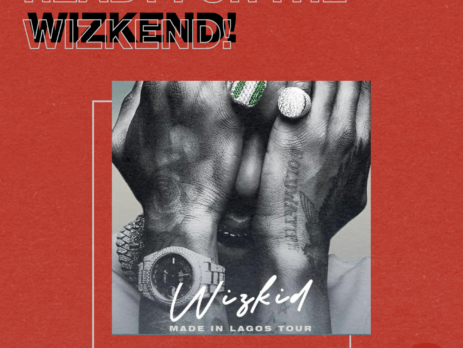
From the moment Nigerian superstar Wizkid sold out London’s O2 in 12 minutes back in August – and proceeded to sell out two further dates shortly after – it was clear that these three nights would be the event of the year. Made in Lagos, the smooth and serene fourth studio album from Nigerian crooner Wizkid has been flying the flag for African and Nigerian music worldwide since its release in October 2020 and, with Wizkid having cultivated a strong UK fanbase over time, the clamour for tickets should have come as no surprise. For those fans lucky enough to secure tickets, the topic of the Black Twitter timeline quickly transitioned to discussing everyone’s outfits for the night, as the concert became something of a Black British Met Gala, if you will. Many braved the blistering cold to deliver show-stopping looks which somehow added to the allure of the evening.

DJs Juls and Tunez, along with warm-up acts, which included King Promise, Afro B and Ms Banks across the three days, kept energy levels high as fans awaited Wizkid’s grand arrival. After perhaps keeping fans waiting a tad too long – although few would argue the performance wasn’t ultimately worth the wait – the crowd hushed as the man of the hour finally took to the stage, stood atop a rising platform decked out with candles as the strum of guitar chords filled the arena. Cue a rapturous reception as Wizkid chanted the hook to his infectious earworm, ‘Joro’, and the audience roared “Joro!” right back at him. This set the tone for the rest of the evening as Wizkid ran through album favourites ‘Mighty Wine’ and ‘No Stress’, as well as more seasoned hits, like ‘Fever’.
As the title of his album suggests, Wizkid takes his role as a global ambassador for African music seriously. In bringing out the likes of “Africa’s boyfriend” CKay to perform his viral hit ‘love nwantiti (ah ah ah)’, Buju to assist with performing the deluxe album cut ‘Big Mood’, and Tems – who stole the show when she graced the stage for the album’s biggest hit ‘Essence’ – Wizkid managed to share his spotlight with the next generation of Nigerian superstars. His special guests did not stop there, with him continually surprising fans by inviting past collaborators, both from London (including the likes of Skepta, Ella Mai and Krept & Konan) and beyond (including the likes of Koffee and Burna Boy), to join him on stage.
A particular highlight of the night arrived when DJ Tunez proclaimed, “Do we have any day one Wizkid fans in the building tonight? This ain’t for you Essence warriors!”, before launching into a medley of back-to-back classic hits, like ‘No Lele’, ‘The Matter’ and ‘Don’t Dull’, as Wizkid dollar bills rained from the sky. For those of us who have been fans of the afrobeats superstar since his introduction in 2010, the nostalgia was nothing short of euphoric. Another personal favourite moment was his performance of ‘Jam’ from Soundman Vol. 1, his 2019 EP which effectively acted as a precursor to 2020’s Made in Lagos.
After slowing down the tempo to perform ‘Smile’ and ‘Blessed’ in a stripped back, poignant and fitting tribute to fashion designer Virgil Abloh, who sadly passed away just hours before the Day 1 show, Wizkid picked up the pace again as the show approached its finale.
With complaints of sound quality lacking at times, and unfortunate incidents of security breaches as fans rushed into the gig on Day 1, Wizkid’s three nights at the O2 certainly weren’t without controversy. Not least, his inviting R&B crooner Chris Brown – who had previously not performed in the UK for over a decade as a result of his infamous 2009 domestic abuse charge involving pop superstar Rihanna – to the stage to perform ‘Go Crazy’ divided opinion and left some in the crowd uneasy. A bizarre moment on Day 3, during which a clearly intoxicated Wizkid attempted to lift his guest Tems also made for uncomfortable viewing. However, these aberrations aside, there was a feeling of triumph as “it’s legendary beats” blared through the speakers, confetti rained down and ‘Ojuelegba’, the unofficial Nigerian anthem, filled the O2 in what felt like the crowning moment of a glorious night spent celebrating over a decade of music from this bona fide global phenomenon.